Blog
PSA grading guide baseball cards

PSA Grading Guide for
Baseball Cards
What Is PSA Grading?
Professional Sports Authenticator, universally known as PSA, is the largest and most recognized third-party grading company in the sports card industry. Founded in 1991, PSA has graded over 45 million cards and remains the gold standard for authentication and condition assessment in the baseball card hobby.
When a card is submitted to PSA, trained graders examine it under magnification and assign a numeric grade from 1 to 10 based on condition. The graded card is then sealed in a tamper-evident plastic holder called a slab, with the grade and certification number permanently displayed. That slab is what you see when you buy a PSA graded card from any seller, including Awakan LLC.
The reason PSA grading matters so much comes down to two things: trust and value. When you buy a raw ungraded card, you are relying entirely on the seller’s description. When you buy a PSA graded card, you are buying a condition that has been independently verified by a third party that stakes its reputation on every slab it seals. For any card worth more than a few hundred dollars, that authentication is not optional for serious collectors.
Founded: 1991
Cards Graded: 45+ million
Grade Scale: 1 (Poor) to 10 (Gem Mint)
Headquarters: Santa Ana, California
Website: psacard.com
Pop Report: Publicly searchable at psacard.com/pop
The Full PSA Grade Scale: 1 to 10 Explained
The PSA scale runs from 1 to 10 with half-point grades available at certain levels. Here is what each grade means in plain terms for baseball card collectors.
The difference between a PSA 9 and a PSA 10 on a key rookie card can mean the difference between $500 and $5,000. That is why the grade matters more than almost anything else.
What PSA Graders Actually Look For
PSA graders evaluate four primary elements when examining a card. Understanding these four criteria is how you start to develop an eye for what grade a raw card might receive before you ever submit it.
Centering
Centering refers to how evenly the printed image sits within the card’s borders. PSA measures centering as a ratio, both left-to-right and top-to-bottom. A PSA 10 requires 60/40 centering or better in each direction, meaning the border on the larger side cannot be more than 1.5 times the smaller border. Off-center cards are one of the most common reasons cards fall below PSA 9.
Corners
Corners are the first place wear shows on any card. PSA examines all four corners for fraying, rounding, and chipping. A PSA 10 requires sharp, clean corners with no visible wear under magnification. Even a single corner with minor fraying will typically push a card to PSA 9 or lower.
Edges
The four edges of the card are examined for chipping, roughness, and nicks. Edge wear is common on vintage cards that were shuffled through binders, stored in rubber bands, or handled frequently over decades. Clean, intact edges are a strong indicator of a high-grade vintage card.
Surface
Surface evaluation covers the front and back of the card. Graders look for scratches, print defects, stains, creases, and loss of original gloss. For vintage cards, surface wear accumulated over 50 to 70 years is expected at lower grades. For modern cards, even a single handling scratch can drop a card from PSA 10 to PSA 9.
PSA vs SGC vs Beckett: Quick Comparison
PSA is not the only grading company. SGC (Sportscard Guaranty) and Beckett Grading Services (BGS/BVG) are the two main alternatives you will encounter in the baseball card market. Here is how they compare.
| Company | Scale | Holder Style | Best Known For | Resale Value |
|---|---|---|---|---|
| PSA | 1 to 10 | Flip-open slab | Vintage cards, highest population data | Highest overall |
| SGC | 1 to 10 | Premium thick slab | Vintage baseball, growing modern market | Strong, especially for T206 and pre-war |
| BGS / BVG | 1 to 10 with sub-grades | Black or white slab | Modern cards, sub-grade transparency | Strong for modern, lower for vintage |
For most baseball card collectors, PSA remains the default choice for vintage cards because the market is deepest and prices are most transparent. SGC has grown significantly in recent years, particularly for pre-war cards and vintage baseball where collectors value the clean holder and the company’s deep history with the format. BGS excels for modern cards where sub-grades add context about specific condition elements.
At Awakan LLC, our inventory includes PSA, SGC, BGS, and CGC graded cards. All grading companies represented in our listings are industry-recognized third parties whose slabs confirm authenticity and independent condition assessment.
Understanding the PSA Population Report
The PSA population report, commonly called the pop report, is one of the most valuable research tools in the hobby. It is publicly searchable at psacard.com/pop and shows how many copies of every card PSA has graded at each grade level.
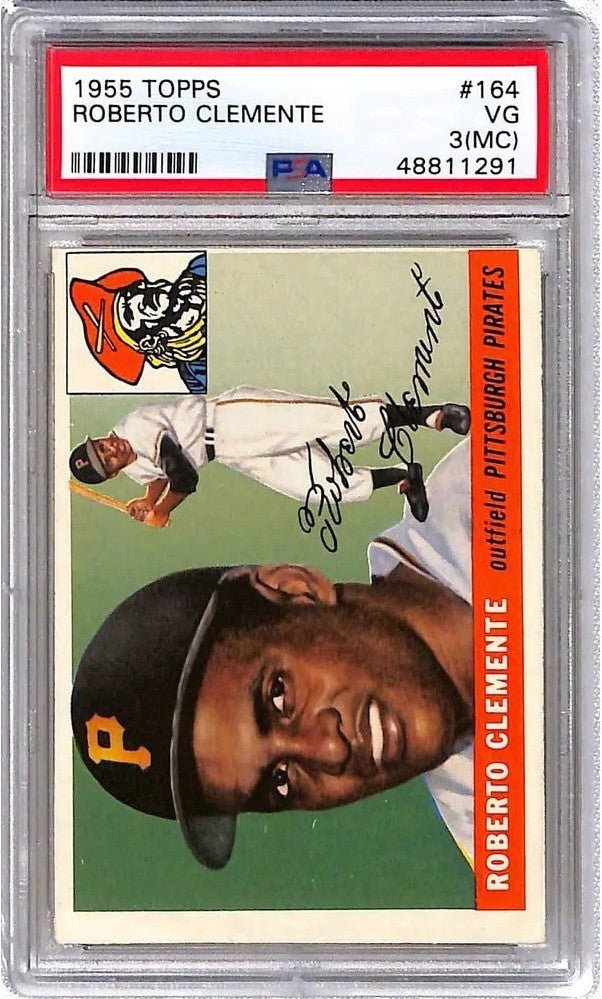
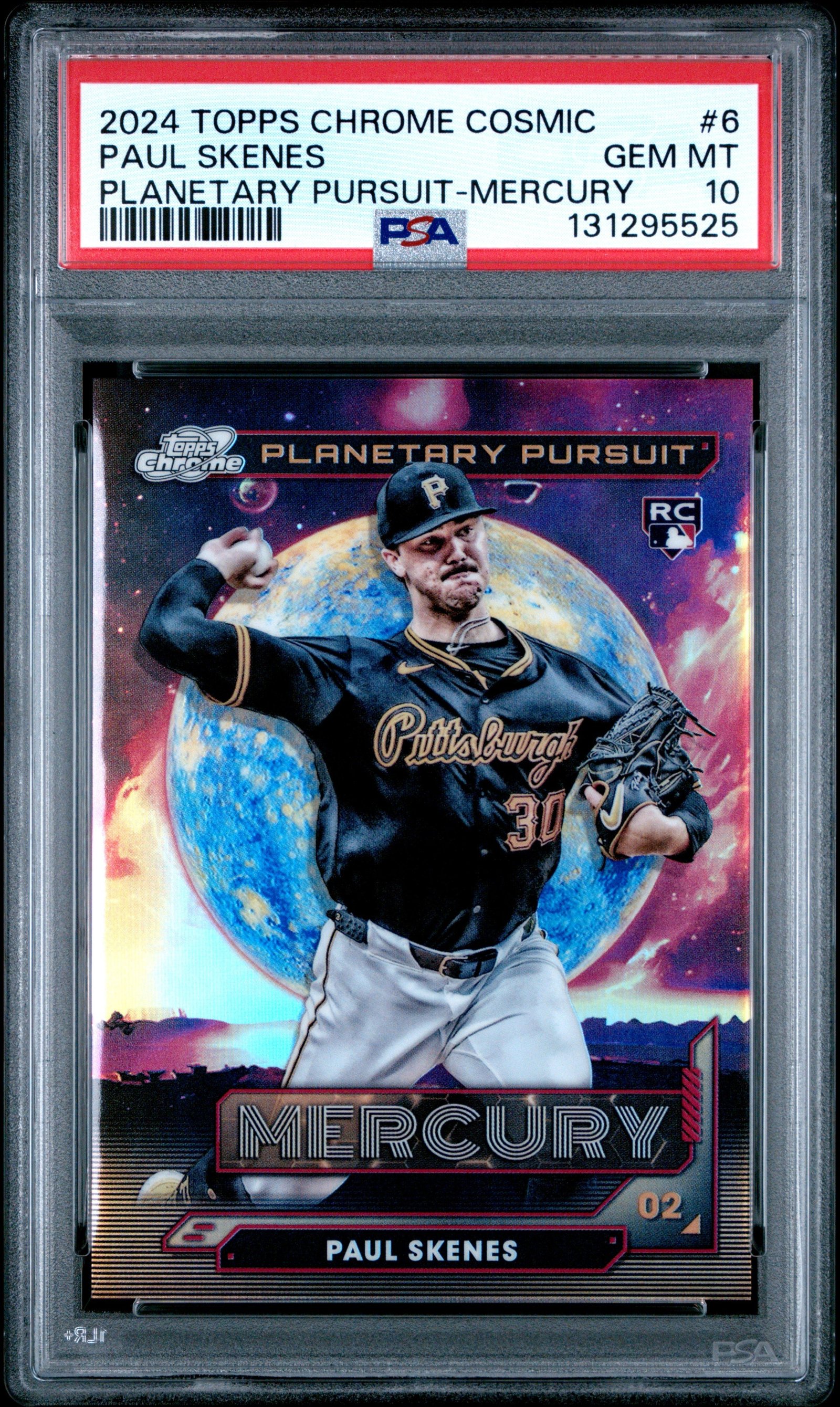
Understanding pop reports is essential for buying and valuing graded cards. A 1955 Topps Clemente rookie card with a PSA 3 population of 40 tells you something very different from a 2024 Topps Chrome Cosmic Paul Skenes with a PSA 10 population of 2. The rarer the high-grade example, the more premium a collector pays to own it.
When we list graded singles at Awakan LLC, we include the certification number in the product details so you can verify the card directly on PSA’s website and pull the population data yourself. Transparency on pop counts is part of how we operate.
Pop 1: Only one copy has ever been graded at that level. Extremely rare.
Low Pop: Fewer than 10 copies graded at that level. Commands significant premium.
High Pop: Hundreds or thousands graded. Value is more market-driven than scarcity-driven.
Pop Higher: Number of copies that have received a higher grade than the one listed.
PSA Grade Modifiers: MC, MK, OC, ST Explained
You will frequently see PSA grades with letter suffixes like PSA 5 MC or PSA 3 MK. These modifiers explain why a card received a grade lower than its surface condition would otherwise suggest, or acknowledge a manufacturing issue that is not the card owner’s fault.
- MC (Miscut): The card was cut off-center during manufacturing at the factory. Not the owner’s fault. The grade reflects condition, but centering is flagged separately.
- MK (Marked): The card has pen markings, autographs, or notations that were not part of the original card. A vintage card signed by a player without authentication, for example, receives MK to acknowledge the writing.
- OC (Off-Center): Centering is significantly off but the card is otherwise in condition that would grade higher without the centering issue.
- ST (Stain): Surface staining is present, typically from wax or storage materials. The grade reflects the card’s condition with the stain acknowledged.
- PD (Print Defect): A manufacturing print defect is present on the card that affects its appearance but was present at the time of production.
These modifiers do not disqualify a card from numeric grading. They provide additional context for buyers who want to understand exactly why a card received its grade. In our listings, we include the full PSA grade string including any modifiers so you know exactly what you are purchasing.
How Grading Applies to Vintage Baseball Cards
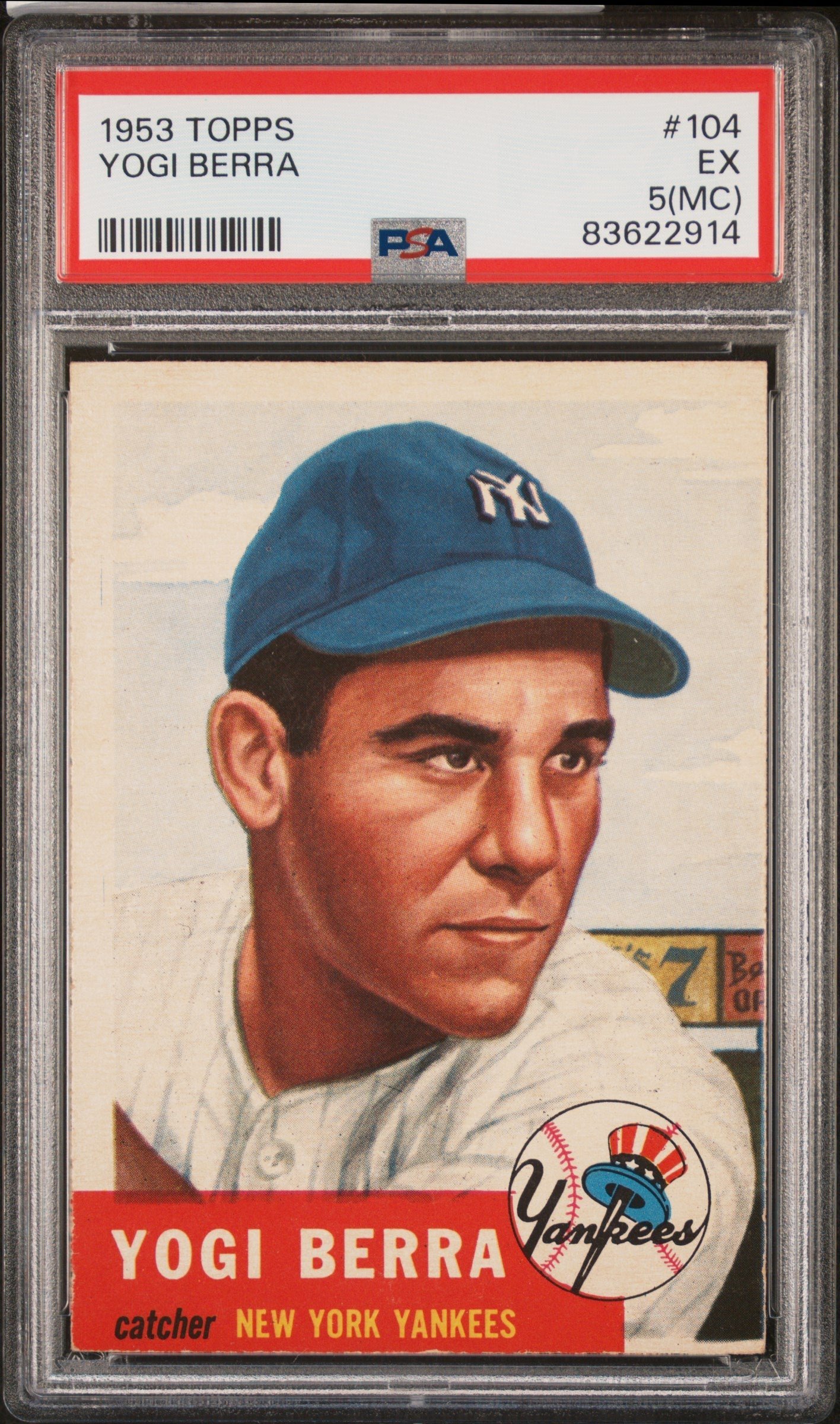
For collectors of vintage baseball cards, grading is where the market lives. A 1955 Roberto Clemente rookie card, a 1967 Mickey Mantle, a 1953 Yogi Berra, a 1966 Clemente-Aaron-Mays leaders card — these are cards where the difference between PSA 3 and PSA 6 represents thousands of dollars, and where buying raw carries significant risk without the seller’s absolute trustworthiness.
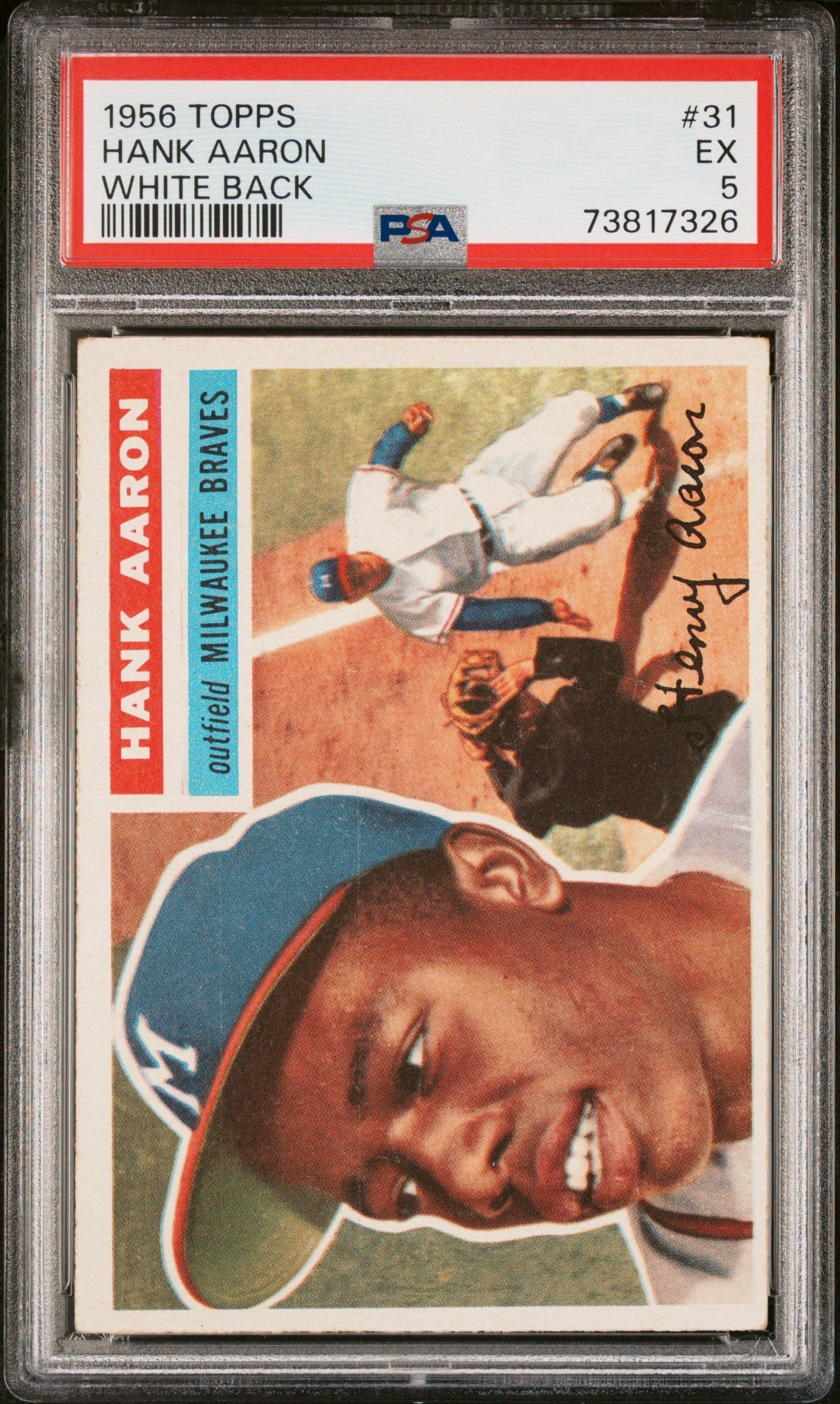
The reality of vintage grading is that most cards from the 1950s and 1960s grade in the PSA 2 to PSA 5 range. PSA 7 or above on a 1955 Topps card is genuinely exceptional and commands strong premiums. A PSA 3 on a Clemente rookie or a PSA 5 on a Hank Aaron is not a consolation prize — it is an authenticated, verified copy of one of the most important cards in the hobby.

How Grading Applies to Modern Rookie Cards and Autos
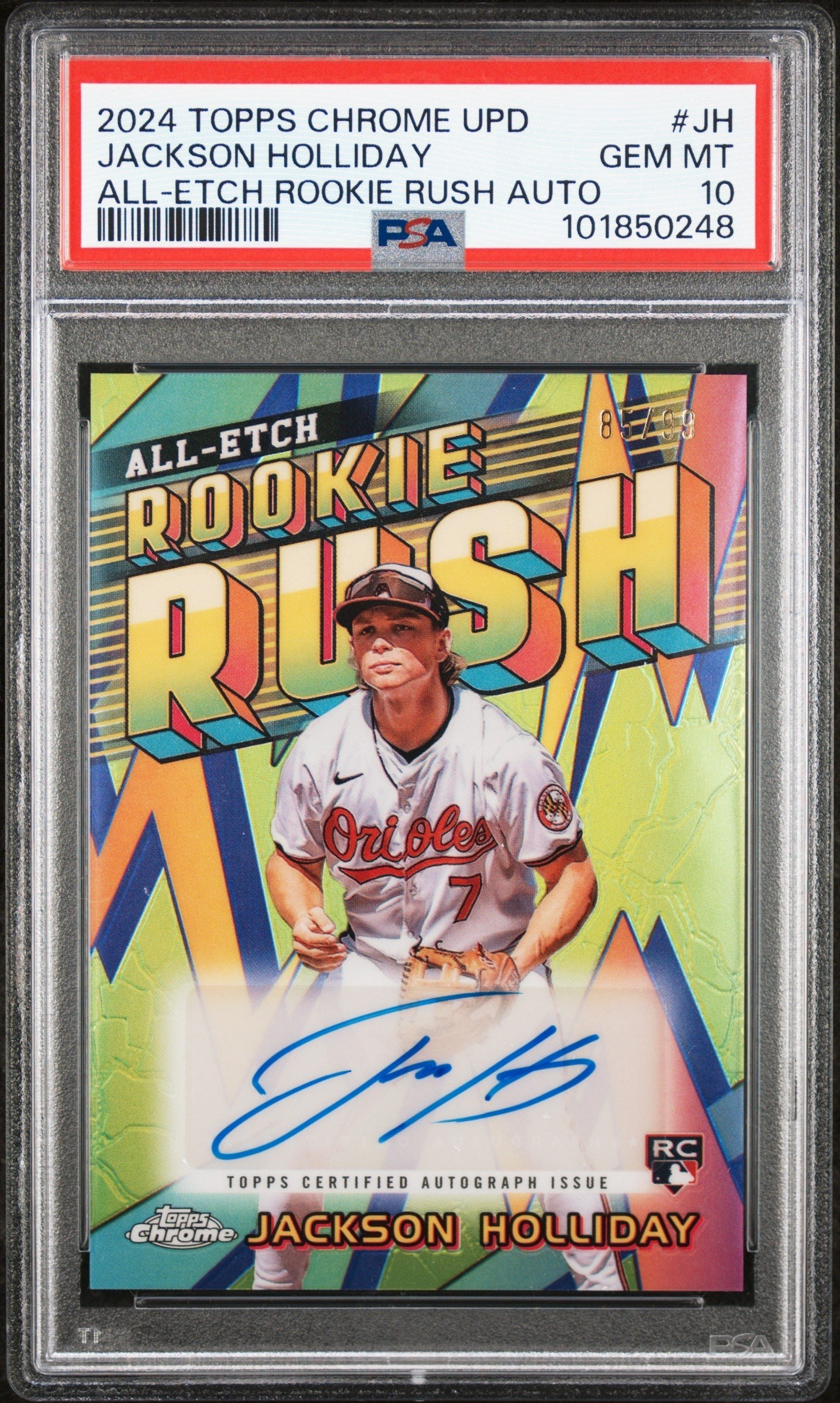
Modern grading operates in a completely different context from vintage. For a card produced in 2022 or 2024, the expectation is high condition. Modern cards were printed on better paper, stored in better conditions, and handled more carefully by collectors who understand the value of pristine cards. A PSA 10 on a modern card is achievable. A PSA 10 on a 1955 Topps card is almost mythological.
For modern rookie cards, the key grade thresholds are PSA 9 and PSA 10. The gap between these two grades on a key rookie can be dramatic — a Paul Skenes PSA 10 might trade at three to five times the price of the same card at PSA 9. That is why condition is so critical when buying modern graded cards, and why knowing the pop count matters.
Is PSA Grading Worth It for Your Card?
This is the most practical question most collectors ask. The honest answer is: it depends on the card.
PSA grading fees start at roughly $20 to $30 per card for standard service (with wait times of several months at peak periods). For a raw card worth $40, grading costs may equal the card’s value even at a high grade. The math does not work.
For a raw 1965 Topps Roberto Clemente worth $100 in Excellent condition, a PSA 6 grade might push its value to $189 or more. The math starts to work. For a 1955 Clemente or a 1967 Mantle, grading is not optional for any serious transaction — the authentication is the purchase.
For modern rookie cards, the breakpoint is typically whether the card has a strong PSA 10 population and whether the player’s trajectory justifies the grading cost. Submitting 20 copies of the same card hoping for PSA 10s is a strategy, not an accident.
If you already own a raw card and want to grade it: calculate the PSA 10 value, multiply by your estimated probability of achieving PSA 10 (typically 20 to 30% for modern cards pulled from packs), subtract the grading fee, and compare to what you could sell the raw card for today. If the expected return exceeds the raw value by more than the fee, grading makes sense.
If you are buying a card specifically to collect it: buying already-graded from a trusted seller like Awakan LLC is faster, cheaper per card, and removes all uncertainty. You know exactly what grade you are getting.
Shop Graded Baseball Cards at Awakan LLC
Every graded card in our inventory comes from established grading companies and includes the certification number so you can verify it yourself. We carry PSA, SGC, BGS, and CGC graded singles spanning vintage Hall of Famers from the 1950s through modern rookies and serial-numbered autos. All cards ship with protective packaging from Wells, Vermont.